Sunday, August 29, 2021

Butch Cassidy and the Sundance Kid, A Reappraisal

The other night Butch Cassidy was on TCM and I watched it and recorded it, and today I watched it again, this time with my wife and her caregiver, so I got to comment and even put some of my comments onto Twitter while I was sitting there, being my own contemporaneous commentator. It was fun! I enjoyed it so much I thought I'd reassess BCATSK here in writing. I'm not sure that my title is right, because I'm not sure I ever appraised it in the first place, except to give it an A+.

I have recurrent fantasies of being in a plane and sitting next to someone I don't know and finding out who they are and making a remark, which is a double fantasy, actually, first from sitting next to them, especially when the people I think of sitting next to would doubtless be flying on a private plane or at the very least traveling with someone, and second, from actually being able to say something, because my experience in the few situations where this has occurred is that I tend to get tongue-tied. But, if I had my fantasy and I was seated next to George Roy Hill, the director of Butch Cassidy, and I stayed collected, what I would say is, you are such a genius. There, that wasn't so hard, was it?

But then he would smile and I would want to elaborate. I would concentrate on Butch Cassidy, even though I loved The Sting, too. “Can I tell you what I liked about it?” I'd ask. “Sure,” he might reply, no matter his inner reservations. “Fans!” he might think, “What a bore!”

But what I would strive for wouldn't be to show him how smart I am – my default position, or you could say my fault position – but to relive it with him. And in the end, few people can resist hearing how great they are; I'd rely on that.

First, it's a mournful picture, because it's about time, and time always runs out. It's a nostalgic picture, nostalgia, from the Greek, nostos – return home, and algia – pain. The pain of returning home, or remembering how it was, memory. From the start, when we're told it's mostly true about these people and these deeds, and that they're all dead now. The musical theme that sustains the movie all the way through, especially plaintive at beginning and end, mournful but beautiful. The faux old movies of Butch and Sundance, black and white, speeded up, herky-jerky, the way movies were at the beginning of movies, which was roughly the time of Butch and Sundance.

And time is what's run out for them, we're told very directly. The marshal they visit in the midst of their flight from the hit squad Mr. E. H. Harriman has assembled to capture and/or kill them (we suspect the latter,) this marshal tells them they're doomed, that their time has passed. What can they do? They have to leave the West, because it's been modernized. They go to New York where we are treated to period music and faux sepia still pictures of Butch, Sundance, and Etta in the modernizing New York, where they can't stay, of course. They have to seek the past, which is Bolivia, for them, where the banks are old, the police are rudimentary, the jungle is old. They try to find a place where they can thrive, just as we see now with climate change, where plants and animals try to find a place to survive higher up the mountain until they run out of space.

Even the posse can't work out in this aging West, which Butch and Sundance observe from their second floor whorehouse of choice where they are honored guests, and the old time sheriff is displaced in his posse-talk by a salesman selling bicycles, “the future.” Of course, when the Butch, Sundance and Emma have to leave the West, the bicycle is left with its wheel spinning in a gulch and Butch tells the future it's not for him, he's off for reclaiming the past.

Emma is the only one who knows how to extract herself, although we don't know how she'll do it. But she just up and leaves them as she said she would, so she doesn't have to see them die. They don't have a way out, because they can't leave their charm behind, the charm she loves and we love. She's embedded with the guys, but not stuck with them.

The sensibility of the movie is exactly 1969, when it came out. They are self-conscious about the changes around them, and they exhibit grace under pressure. It's all going to end, but we'll be clever and appreciate every minute that remains, carpe diem. In 1969, of course, we couldn't see the future, but we could certainly see all the changes that had happened, and we were savoring every minute. I can't say we had the same foreboding that Butch and Sundance had, but there was Vietnam, there were nukes, and there was Nixon. Plus, with changing mores, having two guys and a girl wasn't so outlandish – sometimes it seems Butch and Sundance are really married, they bicker like it. How refreshing!

I love the craftsmanship of the movie. The distinct scenes, or segments, or whatever they're called. The card game, the Hole in the Wall leadership challenge, the first robbery, at Etta's place, the bicycle montage (no talking) with BJ Thomas's Raindrops and Etta's what if it were you and me Butch, the second train robbery where the money flies in the air and they laugh at themselves (look what we did! We are totally crazy!), the big chase where corporate interests are out to wipe them out, the big vistas of the Southwest and how little the people are but how intense vs. the immobile background, back at Etta's and definitive change under pressure with the packages and the buggy, New York as an interlude with sepia stills and contemporary-sounding music in the foreground (no talking), Bolivia, going straight and ironically only then killing people (Think Vietnam. In the movie the only killing is done by the corporate interests or the government, except when Butch and Sundance protect themselves), and realizing what Butch and Sundance are doing to Latin America as the Banditos Yanquis, even when they are charming. The use of music is just genius, Burt Bacharach – I hadn't realized it was him. That's what got me watching it for the second time, I realized I was humming it.

I don't know a lot of movie jargon; there must be a word to using film technique the way “painterly” portrays painting. But whatever the word is, Hill tells the story in movie technique that is native to the art. Music and pictures not words in New York and on the bike. Music as the leitmotif. Sepia vs. technicolor ( Kansas vs. Munchkinland.) It's so filmic.

So, what I'd say to George Roy Hill is, man, I just can't get over I'm sitting next to a genius. You really are, no matter what else you do, no matter who else you are, what a gift you have, and what a gift you have given. But it's not likely this will happen. GRH was born in 2021 and died in 2002 of Parkinson's. See how film cheats time? He's gone, but we still have Butch.

And, oh yeah, I should have added that, as my friend Bob mentions, "you could have at least nodded at William Goldman who wrote the damn thing.  All Hill had to do was point the cameras in the right direction."  Needless to say that Bob is a writer.  But if Goldman sat down next to me, I'd say the same thing, and ask him who did what.

OK, so this is not really a reappraisal, it's a recelebration, a resavoring, a reversion to my own past of hopes and dreams. I think I'll watch it again. Maybe tomorrow. As soon as I get through Season One of The Bridge. I guess not too much is going on in Shenkinland.


Budd Shenkin


Friday, August 6, 2021

The Anonymity Of COVID Infectors

How To Be A Secret Assassin -- Spread COVID

Is deciding to get or not to get vaccinated against COVID a collision of rights, as anti-vaxxers are claiming? Do they have the right not to get vaccinated, because it is a human right to decide what to do with one's own body? (Let's leave aside the obvious for now, that many if not most of these “it's my body” claimants are anti-abortion. The power of rationalization!)

Maybe so. But balancing rights is what a lot of our laws are about. A nation of laws is a nation against might-makes-right. So, is the balancing of rights really difficult in this case?

I think not. I think the balancing of rights in this case is a rather open and shut case. The biggest problem is just visibility of the agent of injury.

If you drive drunk, it's pretty clear that you are a menace to others. When you have your accident and injure others (not to mention yourself), and it's clear that others suffer as a result of your inappropriate self-indulgence, then the cause and the victim are right there for all to see. You drank, you drove, you killed. It's not much of a leap for laws to be enacted to prevent these events by forbidding you to do something to your body – drink alcohol to excess – and then commit and act – driving – that may injure others. Note: it's a preventive law, that you “may” injure others. A certain percentage of the time, you will injure others, not every time, there's just a chance. The law weighs in on competing rights in favor of the potential victims, and there are few who will challenge that societal judgement.

Likewise, do you have the right to step outside your house and fire a gun wildly down the street? No, society says not. You must give up your right to do what you want because it may be injurious to others. Possibly, some of the time, there's a chance.

In fact, some laws go even further than that. Motorists must wear seatbelts. Motorcyclists and bicyclists must wear protective headgear. In these cases, the potential harm isn't to others, but to oneself. Society has judged that the universal law of seatbelts and helmets not only protects the individuals who are protecting themselves, but also protects others, who are influenced by the universality of the laws to follow the societal law-enforced custom. The law protects against the social influence of defiant self-absorption.

And now, closer to home, what about vaccination? For many decades, school children must have been vaccinated against so-called childhood diseases to be able to attend school. It has been controversial recently, it's true, because of the rise of anti-scientific and socially-defiant elements in society. The reasoning used by anti-vaxxers is immensely spurious. The decades-long norm, however, is well-reasoned and accepted. The “violation of body” has been judged to be far-outweighed by the social good of resisting epidemic disease.

Finally, the point of this essay, what about COVID vaccination? Are there differences here that make resistance to COVID vaccination possibly valid? Or does COVID vaccination fall into the same pattern of other regulations of personal behavior in favor of public safety? Only one, and that's really a technicality. Those who don't want to get vaccinated, or those who want to encourage this misbegotten predisposition, can point to the vaccines' not having “official, final” approval, only emergency approval by the Food and Drugs Administration. Which comes, of course, from the both usual and extraordinary typical FDA bureaucratic incompetence, following up their incompetence and uncooperative behavior in delaying COVID testing. The vaccines are as safe as all the other, time-tested vaccines, it's clear, with hundreds of millions of doses administered already.

The biggest difference between driving drunk and shooting wildly in the streets, on the one hand, and spreading COVID, on the other, is visibility. If you could trace the source of each infection, each serious disease, each hospitalization, each death – if you could trace the source to a specific individual as you can with a drunk driver or a shooter, then the connection between individual action (or inaction, in this case) and another individual's affliction would be clear. In that case, perhaps an afflicted person of the family of a deceased might even be able to sue the spreader for reckless endangerment. I don't know, I'm not a lawyer. But at the very least, public opinion could be even more strongly evoked, and Mothers Against Drunk Driving could reappear and do their magic with legislators once again.

Did you ever hear that in an execution by firing squad, one soldier's gun is loaded with blanks, but the executing squad never knows which one it was? So if you're on the squad, you can always claim, it wasn't me. Let's hear it for all those unvaccinated who are claiming, it's not me, after all, I'm healthy, I lead a life filled with exercise and healthy foods – I'm shooting blanks.

I think it's a compelling argument, and rationality would have it that laws mandating universal COVID vaccination should be passed. But “rationality” is a funny word.

I remember when I heard the word “rationalization.” It was puzzling to me – what was the difference between reasoning something out and rationalizing? They seemed to be the same, using reason. Then, when it was explained to me that “rationalizing” was using reason in a spurious way, to defend a position that you wanted to take or had taken anyway, rather than using reason to find a truth wherever it may lie, then, I understood. I saw it immediately as it manifested itself in others! (It took me a little while longer to see it in myself. But there it was. It made me a better reasoner when I understood it.) Rationalizing is universal, and the more you see of the world, and the more you hear from ambitious Republicans and their followers, the more predominant it seems to be.

The power of rationalization is usually stronger than the power of rationalism. So I don't anticipate changing many opinions with this brief analysis. Rationalization is deeply entrenched, and rational argument with opponents generally yields simply a defense, no matter how farfetched. No, the best I am hoping more for helping clarity of thinking for those of us already on the right side of COVID vaxxing thought.

Anyway, that's my hope.

Budd Shenkin

Saturday, July 17, 2021

COVID and the New Segregation


It should be cut and dried. We have COVID, we have anti-COVID vaccine in copious amounts, it's just a question of time (short!) until virtually everyone is vaccinated and the contagion is gone, over, out. You have to handle the hard-to-access populations, and you have to have controls on incoming, but we have good testing, we are rich enough to afford the materials and the personnel. It should be cut and dried.

But, amazingly, it isn't. You would think that all the American carnage, the sickness and the deaths and the horrible pictures of hospitals filled with COVID patients and respirators and loved ones saying goodbye on cell phone while nurses cried listening and some nurses and doctors even killed themselves, you would think that there would be no one and all who doesn't recognize a gift from God when it is delivered, and it's name is Pfizer or Moderna or Johnson and Johnson. You would think the gift would be obvious. And it's free. And the government and others are breaking their backs to make it easily available. You would think it was obvious. Hell, it is obvious, what could be more obvious? It's sure as hell more obvious than thinking you are drinking the blood of Christ and eating his body when you are kneeling in the church, just to grasp randomly at things that people believe.

But, there are the ignorant, there are the charlatans, there are the greedy, there are Fox and Republicans and Rupert Murdoch and you would think they would feel guilty at the very least but maybe they don't. People are calling them cynical. I think cynical is letting them off pretty easy. It's evil, is what it is, is what they are. If lying about a gift from God that will save your life and the lives of others you come into contact with, if lying about that isn't evil, then what is? There is evil in the world, that shouldn't be a controversial statement, Dr. Pangloss is not generally held up as an admirable figure, this is not the best of all possible worlds, and if you look what they are doing with the COVID vaccine you really have to wonder how the world has made any progress at all, and maybe that's debatable, but I think we have, and not just because we got to the moon, but because as confounding as it is to see gobs of people refusing gifts from God, there are more who aren't and their lives are being saved and science is the hero and I think we have made lots of progress, but it's also astonishing that we have, because stupid and evil exist in such numbers that I never realized, but I guess I should have.

I don't want to let the non-vaxxers off the hook by saying they are misled and victims, and that they have not been educated enough to know who and what to trust, and to say that everyone can't be smart, and to say that our health care and education systems have let them down. And I don't want to treat them with respect for their choices, although I do think everyone deserves respect as a person with some exceptions, because we should not respect the evil-doers like Carlson and Murdoch and Trump et al. as coequal persons – just fuck them, I figure, let them go straight to hell – but in the end it doesn't matter. What we have to decide on now is a very practical matter – what do we do with the anti-vaxxers now that COVID has not been eradicated and the virus is upping the threat? What do we do?

Here's what I think we should do. We should treat this as a problem of competing rights. There are those who have the right to be safe, like you and me. And there are those who want to claim the right to remain unvaccinated, for whatever reason they want to, but they defend their right to choose as an element of personal freedom. OK, I say, I think it's ignorant, but knock yourself out. You want to make yourself vulnerable? I guess that's your right. You want to make others vulnerable because of what you are choosing to do? No, that's not your right. I have a competing right, to be safe. How are we going to adjudicate our competing rights?

Well, one thing we know how to do in this country is to segregate. Let's use that knowledge to adjudicate the competing rights. Let's divide all public areas – commercial, governmental, what have you – into those which guarantee that all staff and customers are vaccinated, and into those where there is no such guarantee. We can call the first Safe Areas, with a sign: We Are Threat Free! We can call the second Freedom Areas, with a sign: Do You Feel Lucky?

Some facilities can be all one or all the other – a restaurant, for instance, could be all Free or all Safe. Some facilities are less easy to be one or the other – think DMV – and would need separate entrances and exits and hermetically-sealed areas to conduct business.

Some facilities could be very safe, and require everyone to present or to have on file the vaccination documentation. They would be Completely Safe. Others would go on the honor system. They would be We Think It's Safe. The deniers would just declare how daring they are and say, Take Your Chances.

We always need to balance competing rights, and safety vs. freedom is a frequent competition. When it comes to COVID, we have run into a buzzsaw of negligent and evil ignorance that requires us to recognize a claim of freedom where it wasn't clear we would have had to, but there it is. We can't do for COVID what we did for polio, and measles, and smallpox, because evil has gotten its toehold too far into society. So the next best is to keep safe those who want to be kept safe, and let the others make do with whatever they want to do with their freedom. We can't treat everyone the same, but at least with this kind of segregation, you can choose which group you want to be part of.

I guess being walled off from the stupid shouldn't be so hard to take.

Budd Shenkin

Saturday, July 10, 2021

America's Six Freedoms, A Guide To Our Disunity


America's Four Freedoms, Plus Two


Enemy or Opponent? Trumpism Vs. Americanism

A Guide for the Perplexed


American disunity is as severe right now as any of us can remember. It might be the most severe disunity since the Civil War. There is so much deep unrest, there are so many obvious threats to our basic means of governing, that there must be deep causes for it. Maybe the most profound is the correction we are making in traditional American racism and the associated displacement of a favored ethnic group, perhaps it is the ongoing economic pressure and mistakes in governing over decades, or there are other nominees as well. Or maybe new technical modalities have enabled dark, James Bondian, Rupert Murdochian, Koch brotherian forces to capture the country with lies, deceit and fear to an extent never before seen. It's complicated.

But what has not been the ultimate force behind our descent into discord and disunity has been a disparity of ideas. Despite Keynes' famous quotation about the primacy of ideas in history, most students of events would hold (in the tradition of Marx) that in this time of conflict, ideas are a secondary effect. Reason and reasonableness can be replaced by rationalizations to support basic economic interests, fears, emotions, personal advantages, tribal feelings, prejudice, a sense of justice – in short, all the basic instincts to which man is heir. There are many, maybe a majority, who are never sincerely attached to ideals at all, who just want as much as they can get for themselves, who use arguments just to get what they want, and (since we are importantly driven by comparisons) who mostly want to be somehow better off than at least some others. And it comes as no surprise to recognize that there are politicians who are only interested in power and the various emoluments that office brings, who worship reelection, who function virtually as paid agents of their funders, and to whom democratic beliefs are only shibboleths they must mouth, and sometimes do not even understand.

But while all that is true, it does not mean that ideas are unimportant. In fact, I would argue that when we are under such pressure, our ideas are more important than ever. We need our ideas to clarify our cause to ourselves as well as others, even if we do not hope to persuade more than a few. We need the confidence in ourselves that clarity of thinking can give us, and we need to understand where we stand vis-à-vis the other side. Is the opposition simply our usual opponents with whom we can ultimately cooperate and compromise, or are they our true enemies, whom we must seek to defeat? We have to understand when we are disagreeing on basic principles, and when we have a common end and we are just arguing over means. In cinematic terms, do we share the same image of the Emerald City, the basics of our country, and are we just disagreeing over which Yellow Brick Road to follow, or do we differ on the nature of Emerald City itself?

In times of great division, we need to evaluate our ideas. This is what President Franklin D. Roosevelt did when he needed to unify a divided country to fight World War II. He looked back at the history to find our common ideals, and then used his communication genius to forge a necessary unity of purpose in the starkest demonstration of leadership since Lincoln. Finding those common ideals is what we need to do now, if not to unify to fight a war, at least to clarify our thinking about how divided we actually are, and to chart our course of action.


The Four Freedoms (Plus Two)

Roosevelt faced his problem of unifying the country as fascist Germany was overrunning Europe and World War II loomed, and as we were unprepared materially for war and our people and politicians were significantly divided. His organizational and political skills would take care of material preparation, but to unite the country in purpose, he needed his rhetorical skills. He articulated his conception of bedrock principles of American democracy, principles which stood in stark contrast to the fascists, in his State of the Union address on January 6, 1941. This was his Four Freedoms speech, identifying as our uniting principles Freedom of Speech, Freedom of Worship, Freedom from Want, and Freedom from Fear.

As a nation, we move forward through time, amending our values, and discovering where we stand at each moment. The first two of Roosevelt's freedoms were present in the vision of the Founders; the second two had been discovered more recently. If he were to give the speech today, 80 years later, I think he would have to add two additional freedoms to his bedrock list of four. The Civil Rights movement changed our basic concepts of ourselves permanently, so we need to add Freedom from Discrimination. The Civil Rights movement also identified what Roosevelt took for granted, as a fish is unconscious of the water in which it swims. Now that it is being attacked, we see the need to declare freedom number six, Freedom of Free and Fair Elections.

These Six Freedoms would seem to be a strong bedrock vision of our American Emerald City. If we look at them closely, it should help us once again to define the details of our own current values and their challenges, and it should also help us distinguish how deep our disunity really is.


Freedom #1: Freedom of Speech

Roosevelt was right to put free speech in the first spot – what could be more American than free speech? We see it as both a basic moral individual human right, and as an instrumental asset of society, letting ideas compete in a free marketplace.

The problem with free speech, as with every freedom, is balance. The traditional obvious example of free speech limitation is falsely yelling “Fire!” in a movie theater. We can disagree on current proposed limitations that might or might not be equivalent to yelling fire. Hate speech, for instance, or Holocaust denial – offending feelings is a common price to pay for free speech, but what about exciting prejudices that go beyond simply offending feelings, but which would lead to discrimination or even violence? Or what about denial of publishing by a major outlet based on expressed political views, or alleged views on misogyny, when there are other outlets, perhaps less prestigious, available? These are obviously upsetting and important issues, but at least for the present, they would seem to be boundaries that can be rationally discussed and disputed among opponents.

A more severe test of democracy than those arises from modern technologies. Today we are faced with the threat of the Big Lie, conspiracy theories and misinformation reverberating and promoting home-grown terrorism. Cable television and social media have created platforms living in the nexus of untruths, radicalization, and revenue. While we won't adopt the UK solution of a state institution, OFCOM, to banish lying media, self-regulation is a possibility, political norms could improve by informal pressure and elections, consumers could pressure sponsors of objectionable programs, antitrust agencies could arise from their long slumber to break up social media and conventional media concentration, the fairness doctrine could reemerge, and social media business models could be changed.

While it is not clear what must be done, it is clear that there must be something, because we face not only the threat of the Big Lie, but the threat to the value of truth itself. We regulate truth in advertising, truth in medical claims, truth in safety. We value truth as a basic human duty. Truth is so important to democracy, in fact, that we cannot abide the free-speech abusers, those putting profits over preservation of our values, and those perpetrating lies (or “alternative facts”) for power.

There needs to be agreement on this goal, even if proposed solutions will differ. Something must be done, because the Big Lie constitutes malicious use of a freedom against the freedom itself, which is intolerable. Defenders and proponents of the Big Lie and all the other constant lies spells enemy, not opponent. The Big Lie spells Flying Monkeys impeding the path to the Emerald City.


Freedom #2: Freedom of Worship

Even if Roosevelt's reference to a Christian-tinged God seems outdated today, American freedom of religion provided a stark contrast to the anti-religious fascists abroad (and the Communists, too, of course, which was papered over in favor of the-enemy-of-my-enemy principle). While he cited freedom of worship as a simple personal moral human right, the Founders were closer in time to European religious wars, and to the European power structure triad of king-aristocracy-established religion that America had revolted against. To them, keeping state and religion separate was a passion.

Today, ironically, the Freedom of Worship issue has returned to the table. Deeply held religious convictions are always a threat to civil government, as in the oft-repeated words of former Vice President Mike Pence, for instance, “I am a Christian, a conservative, and a Republican, in that order.” One is left waiting to see where “American” will appear in his list. It seems increasingly clear that several Supreme Court justices might be comfortable with a similar declaration. State support for private and religious schools, refusing to provide services for gay weddings or gay foster parents, prayers under public auspices, refusing to supply contraception because of religious beliefs, forbidding free entry to the country for Muslims, allowing religious services to contravene public health measures during a pandemic, and the intense fights on abortion rights – all test the validity of the line as it has been traditionally drawn. Linda Greenhouse observes that “Despite a rapidly secularizing society... the Court's majority … is reflexively choosing religious over secular interests.”

Does the Emerald City vision of separation of church and state hold? Clearly, the claim of the intense minority that we were founded on Christianity and Christian principles should prevail over the traditional interpretation of the constitution threatens our vision of the Emerald City. To Katherine Stewart, Christian nationalism “is not a social or cultural movement. It is a political movement, and its ultimate goal is power. It does not seek to add another voice to America's pluralist democracy but to replace our foundational democratic principles and institutions with a state grounded on a particular version of Christianity....”

We could still be opponents negotiating over the Yellow Brick Road, but we could also quickly become enemies fighting tenaciously over the vision of the Emerald City. The return of the old European problem that the founders thought they had solved once and for all would be bad news for the republic.


Freedom #3: Freedom from Want

Unlike the clear constitutional pedigree of the first two freedoms, Freedom from Want staked out new ground pioneered by FDR’s New Deal. The state's role in helping to provide the basic material requirements of life has now become our heritage. Roosevelt defended it both morally and instrumentally – a wealthy nation should care for the less fortunate, and democracy requires a secure populace without huge differences of means. In his speech he stressed equality, including access to jobs, civil liberties, pensions, unemployment insurance, and medical care.

The Lyndon Johnson years added to Roosevelt’s social and economic legacy. Although the conservative years of government from Reagan to Trump have led to the most unequal distribution of wealth since the Gilded Age, the basic social safety net has remained intact, and especially with the Affordable Care Act, has even been extended. It is impossible to say that this freedom is not now basic to America's conception of our Emerald City.

We can argue as opponents about the extent of help to be given and the specific path of the Yellow Brick Road. Medicare for All or extend our current system of health insurance? Free university for all, or targeted assistance? State owned housing or subsidized private housing for the poor? But if you deny that state help for economic security needs to be part of the American vision of the Emerald City, if you think that government should be so small it can drown in a bathtub, that health care should not be a right, or that “personal responsibility” should extend even to food and shelter without any governmental support, then you are far from the mainstream and will be counted as an enemy.

The debate over this third right has been sharp. The Right defends the last 40 years of material gains for only the upper classes, giving short shrift to un-American inequalities of opportunity and shrinking social mobility. They are edging up to a very different view of the Emerald City.

To be fair, the Left also tries the patience of traditional American thought with claims of “nobody should be a billionaire,” which is close to “nobody should be rich.” Personally, I would propose a modern Freedom from Want agenda for an Emerald City credo as The Policy of Nobody:

Nobody should be a second class citizen.

Nobody should be without health care.

Nobody should lack education because of money.

Nobody should be food insecure.

Nobody should lack shelter.

Nobody should lack possibilities.


Freedom #4: Freedom from Fear

Roosevelt's fourth freedom was directly aimed at the fascist thugocracies threatening neighbors and the world. Roosevelt cast this threat in terms of a state of mind of safety, security, and non-intimidation, reminiscent of the Declaration of Independence's call for freedom in “the pursuit of happiness.” Our current thugocracy threat where might rules right, of course comes from within rather than from abroad.

States trade their monopoly on violence for a pledge to administer justice fairly. The cell phone camera revolution has illuminated for the country at large what has been known for decades, that police enforcement does not meet the standard of legitimate fairness. Now that the problem is impossible to ignore, opponents will contend on how and at what rate to fix it. Enemies will defend the current standards and prevent police reform.

Given the recent assault on the capital and the specter of armed rebellion by an intense minority in other venues, not a few of them members of exactly those elements of society that exercise the state monopoly of violence, the threat is less abstract that before January 6. The vision of justice fairly administered and backed by judicious use of violence is in question.

The founders tried to balance the need for state monopoly on violence with the need to resist tyranny. Their solution was to ensconce a right to armaments for a “well-regulated militia,” so that central force illegitimately used could be resisted. How this was changed to an interpretation of free guns of all types for all types has a clear history, but a mysterious motive force. What is perfectly clear, however, is that the dispersal of guns has now become inimical to feelings of safety and security in the general population. Solutions are difficult, but realization that solutions are necessary is less so. Opponents will agree on the problem and propose solutions with different means and timelines. Enemies will deny the problem and even seek further “freedom” to own, display, and use guns, as the general population cowers.


Freedom #5: Freedom from Discrimination

A case can be made that the biggest change between Roosevelt's time and ours is the status of discrimination and racism. The Civil Rights movement, and the associated liberation movements that followed, have unalterably changed the basic creed of the country. Non-discrimination is now accepted as morally right, and as instrumentally useful for the country in allowing more people to contribute, and in its morality, enhancing the legitimacy of our government. Were FDR to give his speech today, he would certainly add non-discrimination as a basic value.

Erasing the historical practices of discrimination needs to be part of the Emerald City vision. Which Yellow Brick Road to take, however, is difficult. What time schedule and what kind of enforcement, what if any reparations, how much affirmative action, what protections for non-minorities from counter-discrimination? All changes have their pace, and there is always a progression from innovator to early adopter, to early majority, to late majority, and then to laggards. We seem to be well into late majority adoption of the new ethos.

Realistically, this change is hard, as every change that involves giving up even an unfair advantage is hard. But what is jarring today is to watch television and see spokespeople with foreign names and foreign faces speaking perfect English and extolling the American creed with deep feeling, while traditional white faces and names proclaim themselves the “real Americans” and extol exclusionist, racist doctrines.

Opponents will debate the Yellow Brick Road to non-discrimination; enemies will call the former advantaged group now the oppressed, declare change unnecessary and sabotage and obstruct progress, and support white supremacist groups. We have to acknowledge that the forces of the enemy in this category of the American freedoms are substantial.


Freedom #6: Freedom of the Free and Fair Vote

Free and fair voting is both morally important and instrumentally useful in conferring legitimacy to the government, leading to a more stable society, and (some say) resulting in better decisions and directions for society. It is viewed as foundational for all other freedoms. “Voting is the simplest, most electrifying way that ordinary people can make their voices heard. Anything that unduly inhibits it saps a people’s democratic faith.” Since our free and fair voting system is the clearest possible contrast with fascism, it is remarkable that FDR did not include it as one of his basic freedoms. Given current events, he would not omit it today.

Not that voting has been anything like the naive presentation in civics classes of old. At first slaves, women and others could not vote; the Connecticut Compromise made less-populated states over-represented in the Senate; indirect democracy had senators elected by state legislatures and presidents by the Electoral College. Democracy developed further imperfections such as political machines, candidate choices made in “smoke filled rooms,” Jim Crow voter suppression, gerrymandering, dirty tricks and blatant fraud, electoral financing that enabled corporations and the rich to have more “free speech” than common people, and the abuse of the filibuster. Senators representing 18% of the population can block legislation. Even in good times political scientists concede that there has been “long-standing participatory advantage of the well-educated and the well-off.”

Inclusive voting has its theoretical critics as well. The National Review has consistently argued that “Too many people are voting,” and that voting laws should make voting harder to produce a smaller, "better" electorate.

But despite voting's spotty history and some divergent theories, the arc of voting history has bent strongly toward inclusion, even with setbacks. Especially after the Voting Rights Act of 1965, we now have arguably a freer, fairer, and more inclusive system of voting than ever before, and probably the most error-free and fraud-free system in history. That free, fair, and inclusive elections are part of the Emerald City ideal is evidenced by the fact that opponents feel forced to defend their actions with euphemistic claims of protecting “voting integrity.”

Given this history, the onslaught against free and fair voting in the past ten years is truly remarkable. From violations of norms and often laws, to Russian intervention, to the Big Lie, to unprecedented fouling of the post-voting and tabulation electoral mechanisms saved only by heroic unsung measures, to a spectacular assault on the Capitol, to absurd assaults on the integrity of the 2020 vote, to state by state legal assaults on future voting with the current Republican plan to win the presidency without getting a majority of either popular or electoral votes, to Republican justices of the Supreme Court eviscerating the Voting Rights Act and supporting state anti-free voting and anti-fair counting measures – “if you can keep it” speaks to us right now.

No one expects that elections will be pristine. Elections have always attracted chicanery. But we can ask for sincere adherence to an ideal of free and fair elections within the traditional norms, without significant overt voter suppression, not too many dirty tricks, not too much manipulation, lying, and demagoguery. If there is disagreement on the Yellow Brick Road, we can ask for it to be sincere. But right now, despite popular opinion's widespread support of fair elections, we are seeing more enemies facing off than opponents disagreeing. In fact, the rush to suppress free and fair voting is so severe, we may be on the verge of discovering the contemporary definition of treason. Nothing says “enemy” so strongly as treason.


The Scorecard

For those of you keeping score at home, the six-fold test finds Trumpian Republicans pretty far outside the bounds of the Six Freedoms:

  • Free speech: Trumpist Republicans abuse free speech to foster the Big Lie as a conscious matter of policy.

  • Freedom of religion: Trumpist Republicans repeatedly press positions that place religious beliefs over civic laws, and Republican-appointed Supreme Court justices increasingly support these positions, with possible reversal of Roe vs. Wade pending.

  • Freedom from want: Trumpist Republicans support the new enhanced levels of economic inequality, as particularly evidenced with tax cuts, and continually seek to pare back safety net programs.

  • Freedom from fear: Trumpist Republicans obstruct reform of discriminatory policing, support freedom to carry weapons of war, and defend and encourage armed militias who march with torches, assault the Capitol with gallows erected, and chant “they will not replace us.”

  • Freedom from discrimination: Trumpist Republicans have become strongly anti-civil rights, catering to perceived grievances of whites, often supporting white supremacy.

  • Freedom of free and fair elections: Trumpist Republicans have supported Russian interference with elections, support rejection of honest election results, and support voter suppression legislation across the country with plans even to disrupt electoral mechanics.

A fair reading of these positions reveals such serious dissent with traditionally held values that it is impossible to present them as positions of opponents rather than positions of enemies.


Conclusion

The point of this essay is to find a cogent perspective to make sense of our current perilous situation. Are we facing opponents or enemies in our disunity? Can we look to accommodate and compromise, or must we look to defeat? We look to our history to find our constant and evolving values to make that assessment, using the formulation of Franklin Roosevelt in identifying our constant and evolving values.

Looking at Roosevelt's Four Freedoms, and then adding two that were inherent in his formulation and newly illuminated by our last 80 years, it's pretty clear that the Trump Republican party stands well beyond the role of opponent, firmly in enemy territory. There are certainly adjustments to be made as indicated when we looked at the individual points, but they cannot involve giving way on the essential points. It is pretty clear that strength in opposition is needed, with a goal of victory, not negotiation.

For unity to be reasserted, the Trumpians don't need to disappear – unity is never unanimity, we could well coexist with perhaps 15% of an electorate seditionist in thought. Despite current appearances, we might actually be closer to that goal than it seems. Schlesinger's concept of the “vital center” and “liberal democracy” has always held in the United States pretty well, and it's hard to think that we are in a revolutionary situation now – revolution should not happen in a country with so much liberal democracy history, so much prosperity, so many centers of power, so much decentralization, such a righteous military, so many lawyers, so many influential elites, so much resistance, so much good sense.

Grievances and resentments are the lot of mankind. The question for civil society always is how to tame those emotions in a way that satisfies needs with respect for individuals and groups in a way perceived as “fair enough.” Our system has generally managed to be fair enough at the end to muddle through. Unity does not appear overnight; it appears cumulatively as success follows success. I doubt that we will need a crisis like WW II to be unified. Following a Yellow Brick Road does eventually lead to the Emerald City, no matter how many Flying Monkeys we need to fight off. In America we talk, we do not insurrect.

But it still remains true, in the historic off-hand remark of Philadelphia's patron saint Ben Franklin, “A republic, if you can keep it.”


Budd Shenkin


Thanks very much for the help and encouragement of David Levine and Leif Haase.

There are two earlier versions of this essay, a long one at: http://buddshenkin.blogspot.com/2021/03/finding-unity-four-freedoms-plus-two.html

and a shorter one at:

http://buddshenkin.blogspot.com/2021/05/a-path-to-unity-six-freedoms-of-2021.html

The reader is also referred to an article and a summary on necessary post-Trump reforms, detailing six potential tools, and eight areas for reform:

http://buddshenkin.blogspot.com/2020/05/planning-for-post-trump-reforms.html

http://buddshenkin.blogspot.com/2020/05/post-trump-reforms-executive-summary.html

Wednesday, July 7, 2021

High Speed Trains Belong In Urban Regions


The estimable Steve Rattner opined in the New York Times that Amtrak is making a strategic mistake in aiming to serve small and remote locations and more long haul lines, when short hop airline connections and cars would make more sense. He said that Amtrak connections make sense only in the congested Boston-Washington Northeast Corridor (NEC, not to be confused with neonatal necrotizing enterocolitis). “America is not Europe, with its dense population centers clustered reasonably close together. Nor is it China, essentially starting afresh and without the regulatory, labor and bureaucratic issues that plague government projects here.”

To Rattner, the economic losses that Amtrak incur indicates inefficiency. He points to the folly of governmental planning. The San Francisco to Los Angeles high speed rail line is a farce, he says, and I agree. Rattner's solution is, privatize! “We can use the private sector when appropriate and apply rigorous analysis — not politics or nostalgia — to allocating public funds. We’d be much further along as a nation, if we had done that already.”

He got some letters in response. Train-o-philiacs told of the virtues of the long train trip, which is appealing to the senses, but avoid economic analysis. They are actually touching letters, to me. I also remember Joe Biden's recounting how his train commuting to his home in Delaware gifted him a second family, the regular travelers and train employees on the train. It touches the heart.

As readers know, I myself am not without my opinions, so I weighed in with a letter that the NYT saw fit to publish. I agree with Rattner in his support of Amtrak in the NEC, and with his disdain of both the California misconceived SF to LA high speed line. But I disagree with his conclusion of leave it to private industry. Private solutions to public problems often miss the mark, making money is often not the best criterion, and private solutions have difficulty being long-term and serving the needs of all the people – plus, climate externalities are often neglected. Thoughtful public planning should be possible in the United States, I think and hope, not just in Europe and China!

I've opined previously that we should be thinking about regional transportation in more expansive and imaginative terms. http://buddshenkin.blogspot.com/2018/05/city-congestion-housing-transportation.html. And http://buddshenkin.blogspot.com/2018/05/transportation-policy-is-housing-policy.html.

Luckily, since I had thought about the issue before, I was able to summarize my argument in fewer than 100 words, which no doubt contributed to its having been selected for publication. Here's the letter:

To the Editor:

Steven Rattner is right to impugn the vision of trains hitting small and remote destinations. But both he and Amtrak neglect the contribution that high-speed trains could make to regions around cities. High-speed trains in combination with other transport modalities could allow newly accessible peripheral centers to flourish and render housing problems more easily solvable. Time spent, rather than distance traveled, is the crucial variable in urban development. High-speed trains have a place; they have just been aimed at the wrong targets.

Budd N. Shenkin
Berkeley, Calif.

It would take a lot of thinking through, but I'm sticking with the idea. Everything can't be telecommuting! We will still need to move our bodies for the foreseeable future.

We can use some good high-speed train solutions!


Budd Shenkin

Thursday, June 3, 2021

Coping with COVID - Could Hospital Administration Do Better?


Being A Medical Insider – Sometimes It Works, Sometimes It Doesn't


My Dad, a fine and noted neurosurgeon, was very much a doctor. He was chief of neurosurgery at Episcopal Hospital in a working class area of north Philadelphia. He was in private practice, and part of the deal was that he would go to many outlying hospitals in need of neurosurgical consultation. Stop doing that and your practice dries up, in contrast to the university medical center where all you had to do was to show up. It was a pain, I guess, but he got to see a lot of medicine as it was practiced in real life, in real places, with real people, by typical practicing docs.

His conclusion was contained in this advice: Every family needs a doctor in every generation, to protect the rest of the family from the crap that goes on out there.

That's good advice. Another way of saying it is what my med school classmates passed onto me: You know what they call the person who graduates last in the class? Doctor.

But, besides self-protection against the last-in-the-class dangers, if you are a doc, when you are dealing with medical issues, you are viewed as an insider. If you start getting pushed around by medical staff in any situation, you get to push back with force. And very importantly, as an insider, other docs will treat you with great care and respect because you are a member of the tribe. Of course everyone should be treated that way, and truth to tell, they often are. I can't tell you how proud I am to be a member of a profession that works so hard to treat everyone with respect. For the most part. Not always and not everywhere, but in my personal experience, for what it's worth, more often than not. I sure tried to inculcate that in my practice, I can tell you. Sometimes, giving respect and caring is the most important part of the job. Maybe mostly. But not to get carried away, truthfully, when I'm under the knife, give me the competence, not the emotion, I'll get that later.

Last Thursday was my time to take advantage of being an insider, but in a surprising fashion. At 3 AM my wife, who has a disability, fell in the bathroom, hit her head on the tile floor, was knocked unconscious, stopped breathing, had her face turn gray and her lips turn blue, and then she had a seizure. Then she started breathing but didn't wake up. It was very frightening. I called 911 and the very professional EMT's came to the rescue. They took her to their ambulance and transported her to Highland General Hospital, our county hospital and our nearest trauma center.

I called my step-daughter Sara, who is the doctor in our family of the next generation, like me a pediatrician, and a professor of Pediatrics at UC San Francisco Medical Center, where she is among various titles, chief of the eating disorders program. Sara lives just a mile away, so she got dressed, I picked her up, and we drove down to Highland. I worried about our getting into the ER to be with my wife, but our county is about to be a COVID-19 yellow-risk county, and I've had another incident during the pandemic when I was able to be with Ann as her caregiver. I hoped that both Sara and I, both being docs and both being vaccinated, would be able to be with her in the ER, as would be necessary for her and as would be appropriate for medical-decision making. Happily, we were able to be there with her. Happily, she received excellent care, the staff and docs were excellent, and of course Sara and I were treated as insiders, as colleagues. Happily, the CT scan was normal. Unhappily, having been there for several hours and waking up, she then had a second seizure, which was very unnerving for us.

Now it was the morning and we knew she would have to be there for a few more hours at least, and possibly be admitted, we were urged to go home as she slept, eat some breakfast and take a shower and then come back and figure out what to do next. We accepted their advice, but Sara said to them, we'll be able to both come back in to be with her, right? No problem, we were assured.

When we came back, however, the morning charge nurse had assumed her duties, and we were told at the entrance to the ER that we would not be allowed back in because of COVID restrictions. The tall red-bearded man who staffed the entrance indicated that he was not happy with this decision, and the shorter uniformed guard to the side said that there had already been pushback from Administration over our having been allowed to visit in the first place.

We reacted as anyone who knew us could predict. I was very angry and told them we were now taking her out, even Against Medical Advice (AMA), and driving her home or to another hospital. Sara cried. She observed how they were violating norms that require informed medical decision making for every patient. The red-bearded man gave me a card with the relevant phone numbers to protest. I yelled some more. I was about to get our car out of the parking lot so we could take Ann right now. Sara dissuaded me. I called the ER nursing cellphone number – they had given it to me on Sara's urging before we left – and told the nurse that we were exercising our right to take the patient out. She said that the doctors were about to deal with her case on their rounds so we should wait. We heard nothing more and they no longer answered the ER nurse cell phone. So I texted to them to please not make me take steps to free my wife that would be unpleasant. So, where we had a few hours before blessed our luck in receiving excellent care, we were now full into a shit show, triggered by administration.

Which is where a surprising feature of being an insider came into play. In her UCSF roles, Sara has trained and worked with many members of the profession. It happened that one of her former students worked at Highland. Sara called the number, and as luck would have it, this former student was on duty just one floor above the ER. She would visit the ER and try to set things straight. About 20 minutes later this former student came out of the ER entrance and greeted Sara and met me, and they would now allow one of us to go into the ER to be with Ann. Sara insisted that I be the one to go in.

Shortly after I was in the room, the morning ER doc came around. He had been alerted to our situation by Sara's former student, because, mirabile dictu, he was a UCSF colleague whom Sara had worked with previously. That is, he was a medical friend. That is, we were all insiders. So I got Sara on the speaker phone and we all talked the situation over. We decided that taking Ann home was medically permissible, even preferable, and that's what we did, by ambulance, with three strapping young men who were friendly and professional, the way I'm sure they generally were, but especially now, with a fellow medical professional.  We got home and in time the event receded in memory

But what a shit-show was heavy-handed hospital administration! There is no time for nuance in a pandemic, common-denominator thinking turns out to be extremely low on quality of thought, trusting no one to think. You just have to sneak thought in sideways, away from the eyes of the officious enforcers. Eventually, you just say – Give me a fucking break, asshole! And those who can think, the red-bearded man at the entrance, your fellow professionals, help you find your way into the cracks. When it is possible. Which it often isn't.  We were lucky, even as insiders.

To look at the issue from 30,000 feet, there is often a rift between those who do and those who administrate. Sometimes, it's tragic. See my recent post – http://buddshenkin.blogspot.com/2021/05/the-case-for-professional-quality.html.

And see just today, how the heavy hand and light thought of administration of hospitals continues to be an affliction.

https://www.nytimes.com/2021/06/03/opinion/covid-hospital-visitor-policy.html

O tempora! O mores!


Budd Shenkin

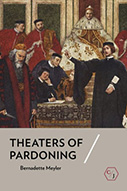
Theaters of Pardoning

 As published in Criminal Law and Criminal Justice Book Reviews, from Rutgers University School of Law:  https://clcjbooks.rutgers.edu/books/theaters-of-pardoning/


Theaters Of Pardoning

Author: Bernadette Meyler
Publisher: Ithaca, NY: Cornell University Press, 2019. 324p.
Reviewers: Budd N. Shenkin and David L. Levine | May 2021

Bernadette Meyler has written an academic book on the power of the pardon in seventeenth century England which, because of Donald Trump, has become of more than academic interest in twenty-first century America. The book displays deep scholarship as it explores the pardon informatively in Meyler’s specialties of law, political theory, and English literature. Her thesis is that in seventeenth century London, theatrical productions not only reflected but also contributed to political discourse of the day. (Spoiler alert, CNN had not yet been invented.) For example, Meyler contends that the pardon’s appearing in 47 different plays from 1600 to 1661 illustrates how salient the power was at the time. She examines several of the period’s plays in detail, reflects on how they related to then-current political events, as well as legal and political thought of the day, including the writings of the great jurist, Sir Edward Coke, and a full chapter on the philosopher, Thomas Hobbes. In this review, we concentrate on the public policy implications of Meyler’s investigation. We first describe the basic dilemmas of the pardon as we see them, then recount some of Meyler’s findings and analysis, and finally comment briefly on conclusions for our current American context.

I.

The pardon would seem to be a relic from when government was by rule of men (and a few women) rather than by rule of law. It has been retained over the centuries, however, for two worthy purposes: (1) to extend mercy for the sake of the recipient and family, perhaps to rectify either a faulty conviction or a too-severe sentence, and (2) to extend mercy for state purposes, as a means to quell dissent and bring dissidents back into the fold. Meyler also reveals more a subtle aspect: extending a pardon demonstrates and strengthens the perception of sovereignty – the one who extends mercy is clearly in charge. She observes that just as on the theatrical stage, in real life, the pardon is often granted in dramatic fashion; it can be a flagrant display of power and sovereignty, the real life equivalent of deus ex machina. Meyler notes that strengthening legitimate exercise of power, always a bedrock requirement of government, was of particular concern in the shadow of the Stuart kings, the English Civil War, and the Restoration.

Even when used legitimately, however, the power to pardon contains hazards. Government needs to be seen as fair. Respect for law is vital to a healthy state, but by its very nature, the pardon represents an exception to the legal process. This fact led sixteenth-century French political theorist Jean Bodin to oppose pardons completely. In addition, the pardon invites resentment in those with similar offenses who go unpardoned, and if the pardoned offender tangibly injured someone, the victim (and family) can harbor resentment.  Meyler also observes that the pardon power can upset the balance of power in government — lodge it with the Parliament and the king suffers, and vice-versa.

Moreover, the pardon can be abused and be used for illegitimate purposes, with even more nefarious results. President Trump has made us all too aware of how using the pardon for the personal and political benefit of the pardoner can appear corrupt. An unscrupulous pardoner can also attack a law directly by pardoning someone who has broken a law with which the pardoner simply disagrees. This can constitute an unwarranted veto of a law, a means to assert an illegitimate power right in a battle between branches of government. In other words, in the wrong hands, the power to pardon can be weaponized.

II.

Meyler reviews how seventeenth-century writers were concerned with how, when, by whom, and with what motives the pardon should best be utilized. Her major attention is focused on three plays from the reign of King James I of England (1603-1625) – William Shakespeare’s Measure for Measure (1604), John Ford’s The Laws of Candy (1619-23), and Philip Massinger’s The Bondsman (first performed in 1624, but played for decades). She then touches on Cosmo Manuche’s The Just General (1652) and his The Banish’d Shepherdess (1659-60). Finally, departing drama and opting for political theory, Meyler considers deeply the works of Thomas Hobbes during the Restoration, especially concerning The Act of Oblivion (1660), which ordered that all events concerning the Civil War from 1637 to 1660 officially be forgotten.

The plot of Measure for Measure is well known to modern readers. The ruling Duke of Vienna entrusts his ruling position to a subordinate, Angelo, and secretly goes underground in disguise. His replacement uses the letter of a heretofore unenforced law against a young man in order to extort sexual favors from his sister, who is a nun.  Angelo’s misrule for personal gain is revealed by the Duke-monk who reassumes his control, and turns tragedy to comedy (tragicomedy was the genre for most pardon plays) by pardoning everyone and compelling all the play’s lovers to marry. Perhaps we are to conclude that an evil ruler can use the law to do evil, but a good ruler can keep the state together harmoniously by using the pardon power wisely. We are tempted to think that just as the Duke’s pardons transmute a tragedy into a comedy, that should be possible in real life as well. It probably also refers back implicitly to the Oresteia, where law and the pardon were seen as the alternative to endless cycles of revenge and retribution. Does Measure for Measure refer to the then-current difficulties of the state in establishing legitimacy and the difficulties of the king in withstanding the incursions on his sovereignty by Parliament? Does it even foresee the possibilities of revolution in the Great Rebellion? Meyler thinks so. She also thinks Shakespeare’s lesson was lost upon James, who was known to have seen the play in London in 1604. James encountered the Gunpowder Plot less than a year later, but rather than using the royal pardon to quell dissent (a la the wise Duke of Vienna), he tossed the political problem to Parliament. By doing so, he inadvertently diminished his sovereignty in favor of Parliament’s power, which decided to draw and quarter the perpetrators.

Meyler contends that James didn’t absorb Shakespeare’s message, but who is to judge when to use the velvet glove and when to employ the mace? There is a difference between an opponent and an enemy; there is a difference between mainstream and fringe; there is a difference between belief and action. There is a time to reconcile and a time to extirpate. There is a time to act personally, and a time to defer to others. Who knows definitively which is which?

Over a decade later, more conscious of the fragility of the state than Measure for Measure, Meyler says that “The Laws of Candy and The Bondsman … vividly present the possibility of disaster and crystallize how variants on pardoning could contribute to reformulating the state.” (p. 169.) The Laws of Candy takes place on the island of Crete, the same locale as the play’s inspiration, Plato’s The Laws. A basic law in this fantasy is that ingratitude is punishable by death, but as would seem inevitable, a string of ingratitudes threatens the death of so many Candy principals that the state itself would fall. Pardons are the only answer, but the leadership is compromised, so instead of coming from a domestic ruler, an outsider from Venice influences the locals to democratically and personally pardon one another. The pardons allow lovers to find each other and tragedy again transmutes into tragicomedy. Candy presents, then, an alternative imagined way of effecting pardons.

The Bondsman, inspired by the Stoic tradition of Seneca from ancient Rome, tells the story of a slave insurrection occasioned by a cruel and poorly self-regulated ruling class in ancient Syracuse on the island of Sicily, which threatens to bring down the state. With a plethora of blame to go around, some Bondsman characters would seek to put the revolt down with vengeance, others to pardon widely out of pity. It again is left to an outsider, the leader of the army summoned to defend Syracuse when the dissolute leadership was incapable and unwilling to do so, to mete out punishment and pardons so that the state does not dissolve. He proves to be the incarnate Stoic philosopher who possesses clemency, the cool reasoning state of mind that stands between the emotional extremes of cruelty and pity, who can punish and pardon wisely, sometimes committing acts he personally deplores, but all to the higher purpose of preserving the integrity or the state. Sometimes priorities are at odds with one another, and one must take steps for the state that one personally regrets. The solution focuses less on the arrangement of a polity and more on the necessary qualities of leadership, as in The Laws of Candy, coming from outside the state. As a tragicomedy, in the end, there are marriages and happiness by virtue of strategic pardons.

As the English Civil War progressed and the monarchy was threatened, James’ grandson, King Charles II, proposed the Act of Oblivion, which Parliament passed in 1660. This is perhaps the ultimate pardon, but at the same time unlike it. The pardon is to an individual, not to a class of persons, more like an individual judgment than generally-applicable legislation. A pardon forgives, but it doesn’t forget. In contrast, the Act of Oblivion was the ultimate act of bestowing reintegration on the unsuccessful rebels, not mere forgiveness of a few individuals. Like Seneca, Hobbes saw the state’s preservation as the achievement of a state of peace, and even if the Act of Oblivion solidified the increasing power of the Parliament vis-a-vis the king, he was for it.

III.

After Meyler’s detailed analysis, what we are left with are eternal dilemmas with the pardon power. If it is the choice of a single sovereign (as our eighteenth-century Founders designated for us in the U.S. Constitution), we are wholly dependent on the good character and perspicacity of that sovereign. Wise sovereigns, such as those who emerge in the plays Meyler addresses, can do good for people and country, and enhance personal legitimacy, by pardoning wisely. The plays, however, tend not to consider when the “opposition” is truly “the enemy,” and must be crushed. The Act of Oblivion seemed to work well after the English Civil War; Truth and Reconciliation worked well in South Africa; but the Nuremberg trials worked well, too. The situation tells the tale.

Meyler is very effective in situations real and imagined, and in citing theory that offers options in where the power to pardon might be lodged – it need not be a King, a President, or a Governor. She speculates at the end that in the U.S. today, perhaps the pardon should be “democratized.” As it happens, her idea is very reminiscent of what we have called for, given the history of pardon misuse since Watergate. We have proposed that a constitutional amendment requiring pardons must be ratified with the co-signature of the Speaker of the House to become effective. Perhaps this is the germ of the idea that Meyler has in mind.

Meyler has written a complex book, extensive in scope and with many strands. It is not for the faint-hearted or casual reader. But her deep scholarship and inventive imagination have done a significant service for those who must now reckon with a vexing issue in the post-Trump era: Should the power of the pardon, what Alexander Hamilton called “the benign prerogative,” continue to rest solely in the hands of just one person, our President? Meyler’s Theaters of Pardoning gives us some important considerations to weigh as we address possible reform options.

References:

Budd N. Shenkin & David I. Levine, Should the Power of Presidential Pardons be Revised?, 47 Hastings Constitutional Law Quarterly 3 (2019)

The Federalist No. 74 (Alexander Hamilton) (Terence Ball ed., 2003)

Budd N. Shenkin, M.D., M.A.P.A. is a Member of the Board of Advisors of the Goldman School of Public Policy at the University of California, Berkeley.

David I. Levine, J.D., is Raymond L. Sullivan Professor of Law, University of California, Hastings College of the Law, San Francisco. Contact: 510-517-4013